C/ Hortes, 22 17001 Girona - 972 212 395 | De 9.30h a 13.30h i de 16.30h a 20.00h de Dilluns a Divendres | Dissabte de 9.00h a 13.30h i de 17.00h a 20.15h
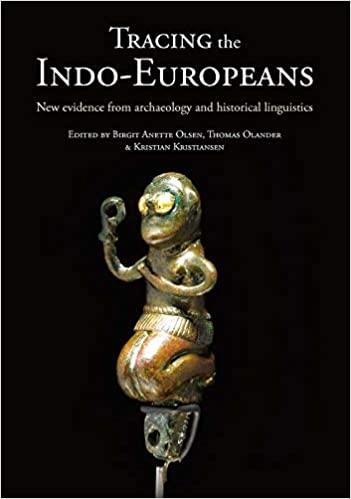
TRACING THE INDO-EUROPEANS.NEW EVIDENCE FROM ARCHEOLOGY AND HISTORICAL LINGUISTICS
Recent developments in aDNA has reshaped our understanding of later European prehistory, and at the same time also opened up for more fruitful collaborations between archaeologists and historical linguists. Two revolutionary genetic studies, published independently in Nature, 2015, showed that prehi...
Recent developments in aDNA has reshaped our understanding of later European prehistory, and at the same time also opened up for more fruitful collaborations between archaeologists and historical linguists. Two revolutionary genetic studies, published independently in Nature, 2015, showed that prehistoric Europe underwent two successive waves of migration, one from Anatolia consistent with the introduction of agriculture, and a later influx from the Pontic-Caspian steppes which without any reasonable doubt pinpoints the archaeological Yamnaya complex as the cradle of (Core-)Indo-European languages. Now, for the first time, when the preliminaries are clear, it is possible for the fields of genetics, archaeology and historical linguistics to cooperate in a constructive fashion to refine our knowledge of the Indo-European homeland, migrations, society and language. For the historical-comparative linguists, this opens up a wealth of exciting perspectives and new working fields in the intersections between linguistics and neighbouring disciplines, for the archaeologists and geneticists, on the other hand, the linguistic contributions help to endow the material findings with a voice from the past. The present selection of papers illustrate the importance of an open interdisciplinary discussion which will gradually help us in our quest of Tracing the Indo-Europeans.
Aquest lloc web almacena dades com a cookies per habilitar la funcionalitat necessària del lloc, inclosos anàlisis i personalització. Pot canviar la seva configuració en qualsevol moment o acceptar la configuració predeterminada.
Les cookies necessàries ajuden a fer una pàgina web utilitzable activant funcions bàsiques com la navegació a la pàgina i l'accés a àrees segures de la pàgina web. La pàgina web no pot funcionar adequadament sense aquestes cookies.
Personalizació
Les cookies de personalització permeten a la pàgina web enregistrar informació que canvia la forma en què la pàgina es comporta o l’aspecte que té, com el seu idioma preferit o la regió en el que vostè es troba.
Anàlisi
Las cookies estadísticas ayudan a los propietarios de páginas web a comprender cómo interactúan los visitantes con las páginas web reunint i proporcionant informació de forma anònima.
Marketing
Les cookies de màrqueting s’utilitzen per retrocedir als visitants a les pàgines web. La intenció és mostrar anuncis rellevants i atractius per a l'usuari individual, i per tant, més valiosos per als editors i tercers anunciants.