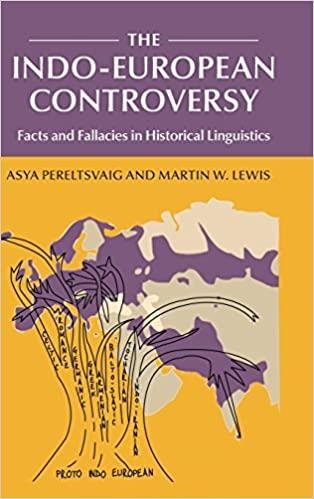
• THE INDO-EUROPEAN CONTROVERSY

    PERELTSVAIG,ASYA CAMBRIDGE UNIVERSITY PRESS IDIOMES Ref. 9781107054530 Ver otros productos del mismo autor
    Over the past decade, a group of prolific and innovative evolutionary biologists has sought to reinvent historical linguistics through the use of phylogenetic and phylogeographical analysis, treating cognates like genes and conceptualizing the spread of languages in terms of the diffusion of viruses...
    Peso: 250 gr
    POR CONFIRMAR
    120,00 €
  • Descripción

    • ISBN : 978-1-107-05453-0
    • Fecha de edición : 30/04/2015
    • Año de edición : 0
    • Autores : PERELTSVAIG,ASYA
    • Nº de páginas : 0
    Over the past decade, a group of prolific and innovative evolutionary biologists has sought to reinvent historical linguistics through the use of phylogenetic and phylogeographical analysis, treating cognates like genes and conceptualizing the spread of languages in terms of the diffusion of viruses. Using these techniques, researchers claim to have located the origin of the Indo-European language family in Neolithic Anatolia, challenging the near-consensus view that it emerged in the grasslands north of the Black Sea thousands of years later. But despite its widespread celebration in the global media, this new approach fails to withstand scrutiny. As languages do not evolve like biological species and do not spread like viruses, the model produces incoherent results, contradicted by the empirical record at every turn. This book asserts that the origin and spread of languages must be examined primarily through the time-tested techniques of linguistic analysis, rather than those of evolutionary biology.

Este sitio web almacena datos como cookies para habilitar la funcionalidad necesaria del sitio, incluidos análisis y personalización. Puede cambiar su configuración en cualquier momento o aceptar la configuración predeterminada.

política de cookies

Esenciales

Las cookies necesarias ayudan a hacer una página web utilizable activando funciones básicas como la navegación en la página y el acceso a áreas seguras de la página web. La página web no puede funcionar adecuadamente sin estas cookies.


Personalización

Las cookies de personalización permiten a la página web recordar información que cambia la forma en que la página se comporta o el aspecto que tiene, como su idioma preferido o la región en la que usted se encuentra.


Análisis

Las cookies estadísticas ayudan a los propietarios de páginas web a comprender cómo interactúan los visitantes con las páginas web reuniendo y proporcionando información de forma anónima.


Marketing

Las cookies de marketing se utilizan para rastrear a los visitantes en las páginas web. La intención es mostrar anuncios relevantes y atractivos para el usuario individual, y por lo tanto, más valiosos para los editores y terceros anunciantes.