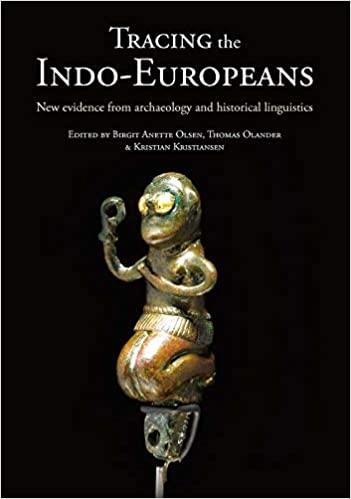
Recent developments in aDNA has reshaped our understanding of later European prehistory, and at the same time also opened up for more fruitful collaborations between archaeologists and historical linguists. Two revolutionary genetic studies, published independently in Nature, 2015, showed that prehi...
Recent developments in aDNA has reshaped our understanding of later European prehistory, and at the same time also opened up for more fruitful collaborations between archaeologists and historical linguists. Two revolutionary genetic studies, published independently in Nature, 2015, showed that prehistoric Europe underwent two successive waves of migration, one from Anatolia consistent with the introduction of agriculture, and a later influx from the Pontic-Caspian steppes which without any reasonable doubt pinpoints the archaeological Yamnaya complex as the cradle of (Core-)Indo-European languages. Now, for the first time, when the preliminaries are clear, it is possible for the fields of genetics, archaeology and historical linguistics to cooperate in a constructive fashion to refine our knowledge of the Indo-European homeland, migrations, society and language. For the historical-comparative linguists, this opens up a wealth of exciting perspectives and new working fields in the intersections between linguistics and neighbouring disciplines, for the archaeologists and geneticists, on the other hand, the linguistic contributions help to endow the material findings with a voice from the past. The present selection of papers illustrate the importance of an open interdisciplinary discussion which will gradually help us in our quest of Tracing the Indo-Europeans.
Este sitio web almacena datos como cookies para habilitar la funcionalidad necesaria del sitio, incluidos análisis y personalización. Puede cambiar su configuración en cualquier momento o aceptar la configuración predeterminada.
Las cookies necesarias ayudan a hacer una página web utilizable activando funciones básicas como la navegación en la página y el acceso a áreas seguras de la página web. La página web no puede funcionar adecuadamente sin estas cookies.
Personalización
Las cookies de personalización permiten a la página web recordar información que cambia la forma en que la página se comporta o el aspecto que tiene, como su idioma preferido o la región en la que usted se encuentra.
Análisis
Las cookies estadísticas ayudan a los propietarios de páginas web a comprender cómo interactúan los visitantes con las páginas web reuniendo y proporcionando información de forma anónima.
Marketing
Las cookies de marketing se utilizan para rastrear a los visitantes en las páginas web. La intención es mostrar anuncios relevantes y atractivos para el usuario individual, y por lo tanto, más valiosos para los editores y terceros anunciantes.